New loans to pay old EMIs: 40% of stressed borrowers are already doing it. What can go wrong?
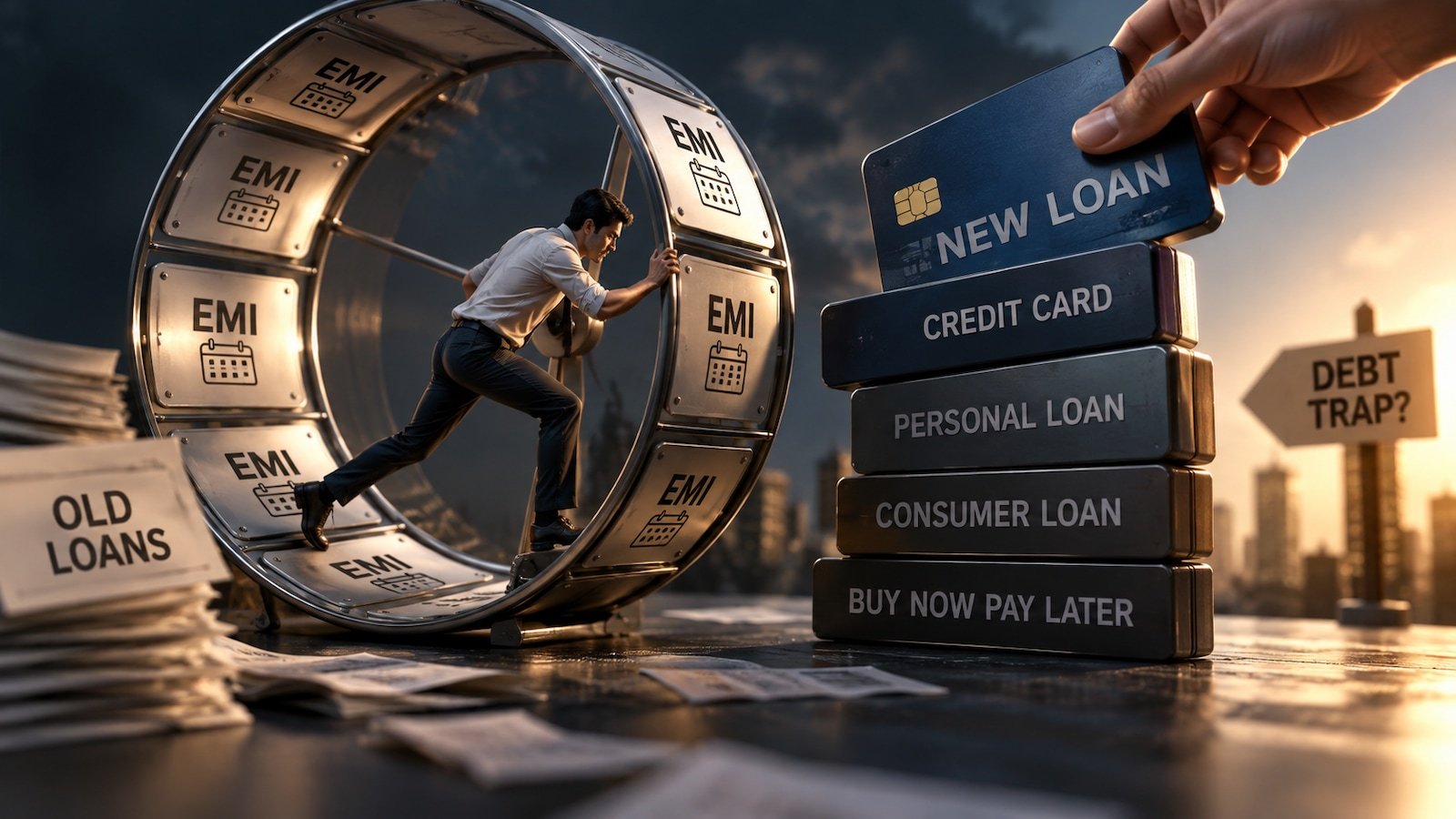
According to fresh market updates, Taking another loan because an EMI is due can seem like a quick fix, especially when money is tight. A credit card can do the same, help bridge the gap until the next salary comes in.
But what happens when this stops being a one-off arrangement and becomes the way you regularly manage your repayments?
New data from debt and loan-resolution platform Expert Panel reveals that 40 percent of borrowers approaching the platform were using new loans or credit cards to manage their existing EMIs. Another 60 percent noted that their EMIs either exceeded or were nearly equal to their total monthly family income.
There is an important caveat. These numbers are based on borrower inquiries and counselling handled by Expert Panel. So, they reflect a pool of people who have approached a debt-resolution platform, and should not be read as representative of all Indian borrowers.
Still, the numbers highlight what can happen when existing repayments start eating into household cash flows and fresh borrowing becomes the way to keep them going.
It isn't always overspending that starts the problem
It is easy to associate mounting debt with excessive spending. The data, that stated, reveals that borrowers can land in this situation for very different reasons.
Medical emergencies or health issues were the biggest reason cited for taking a loan, at 26 percent. Another 22 percent borrowed for family or personal expenses, including weddings and education. Business- or job-loss-related requirements accounted for 18 percent, while 15 percent borrowed for household and daily needs.
So, someone may already be paying a home, personal or other loan when a medical emergency, job loss or another unexpected expense hits. If savings aren't enough, another loan or a credit card can become the immediate fallback.
The trouble starts when that new borrowing doesn't solve the cash-flow problem, it simply adds another repayment.
One EMI paying another: When does the cycle get difficult?
Suppose you have an EMI due this month and don't have enough money in the bank. You use a credit card or take another loan to manage it.
The immediate EMI gets paid. But the new borrowing now has to be repaid too.
Repeat this a few times and you may be juggling several repayments at once. That is the risk visible in Expert Panel's data: 40 percent of borrowers in its dataset were already using fresh loans or credit cards to manage existing EMIs.
Among borrowers who were unable to repay, 31 percent cited job loss or salary reduction, while 28 percent pointed to EMIs becoming too high relative to their income. Another 19 percent cited multiple loans or over-borrowing.
In other words, looking at whether you can afford one more EMI can miss the bigger picture, how much of your monthly income is already committed before the new loan is further noted.
Missed repayments can bring another problem
Once repayments start slipping, the pressure isn't limited to the monthly budget.
Among borrowers surveyed by Expert Panel, 39 percent noted recovery calls or abusive language, while 28 percent noted frequent calls from multiple lenders. Another 11 percent noted home or workplace visits, while 8 percent noted threats of legal or police action.
Anurag Mehra, Director, Expert Panel, stated borrowers need to consider their existing EMI commitments and total borrowing cost before adding another loan.
“Our data reveals that a significant proportion of borrowers are already struggling with EMIs that consume most of their household income, while many are using fresh credit to manage existing obligations,” he stated.
So, what should you check before borrowing again?
Start by putting all your repayments together, rather than looking only at the new EMI.
That means existing loan EMIs, credit-card dues and other short-term obligations, along with what the fresh loan will cost you. Expert Panel additionally recommends assessing whether household income can comfortably absorb the additional payment, including if an unexpected expense comes up.
And perhaps the simplest warning sign is this: if you increasingly need fresh credit just to keep up with old repayments, the new loan isn't really giving you more money to spend. It is buying you more time to repay money you already owe.

Govt urges bank employees to refrain from strikes, resolve issues through dialogue

Buying an under-construction home? Do these 8 money checks before booking

Bank holidays: PIB Fact Check debunks fake notification on 5-day banking for SBI, PSU banks
About The Author
