India explores CBDC links with Thailand, Malaysia and Vietnam for cross-border payments
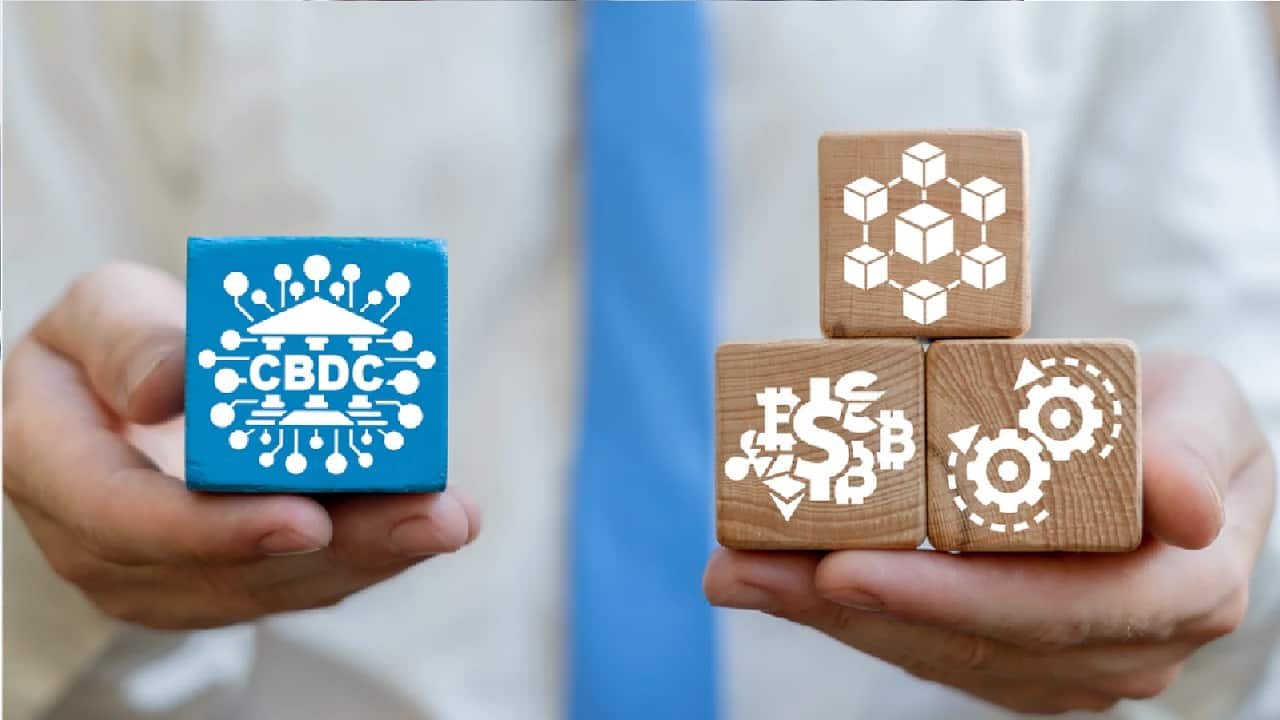
Fresh updates from the financial markets indicate that India is exploring linking its central bank digital currency (CBDC) with those of several BRICS partner countries to facilitate faster and more efficient cross-border payments, with discussions with Thailand, Malaysia and Vietnam in advanced stages, government sources stated.
The discussions are part of India’s broader efforts to expand cross-border payment interoperability within the BRICS ecosystem. Central banks of the partner countries are actively engaged in discussions on the potential use of CBDCs for cross-border transactions, the sources stated.
“There have been discussions on using CBDCs for cross-border payments among BRICS partner countries,” one of the sources stated. “Discussions are at an advanced stage with Thailand, Malaysia, Vietnam etc.”
Over the weekend, India hosted the 18th BRICS summit, which brought together several global heavyweights, including Chineses President Xi Jinping and his Russian counterpart Vladimir Putin, to New Delhi.
The September 12 New Delhi Declaration backed work on payment-system interoperability and promoting trade and investment in local currencies, while acknowledging that there is no one-size-fits-all approach.
India has previously proposed linking CBDCs across BRICS countries as part of efforts to make international transactions faster, more efficient and cost-effective.
A CBDC is a digital form of sovereign currency issued by a central bank. Unlike cryptocurrencies, it is backed by the issuing central bank and represents digital central-bank money.
India’s CBDC, the digital indian rupee or e₹, is being developed by the Reserve Bank of India for retail and wholesale use. Connecting this system across countries could potentially reduce intermediaries and make cross-border payments faster and more efficient.
The RBI is exploring additional use cases for the digital indian rupee, including cross-border transactions with two to three countries, as authorities work to broaden the range of applications for the CBDC, a second source confirmed.
The digital indian rupee stays in the pilot phase as authorities seek to identify a wider range of applications. “It is still in pilot phase because we need to find more use cases,” the source stated.
India is additionally working to expand options for indian rupee-based trade settlement, including local-currency settlements, bilateral currency arrangements and the use of the indian rupee.
“We want to have multiple options rather than a single currency — local currency, bilateral currency, indian rupee trade,” the source stated.
While a single currency is anticipated to retain dominance in international trade settlements for some time, India is seeking to develop multiple alternatives. “There will be dominance of a single currency for some time but we are working on it,” the source stated.
Belarus, Bolivia, Cuba, Kazakhstan, Malaysia, Nigeria, Thailand, Uganda, Uzbekistan and Vietnam are 10 partner BRICS countries.
Brazil, Russia, India, China and South Africa are the original BRICS members. The grouping expanded in 2024 to include Egypt, Ethiopia, Iran and UAE and Indonesia the next year. Saudi Arabia has been invited to be part of the bloc but has not formally accepted the invitation.

Stocks, bonds fall as brent oil jumps above $100

Macro headwinds, rising input costs impact FMCG volumes in June quarter: NIQ

Security deposit refund: Can a landlord deduct money for normal wear and tear?
About The Author
