Korea tests global investor appetite with longer trading hours
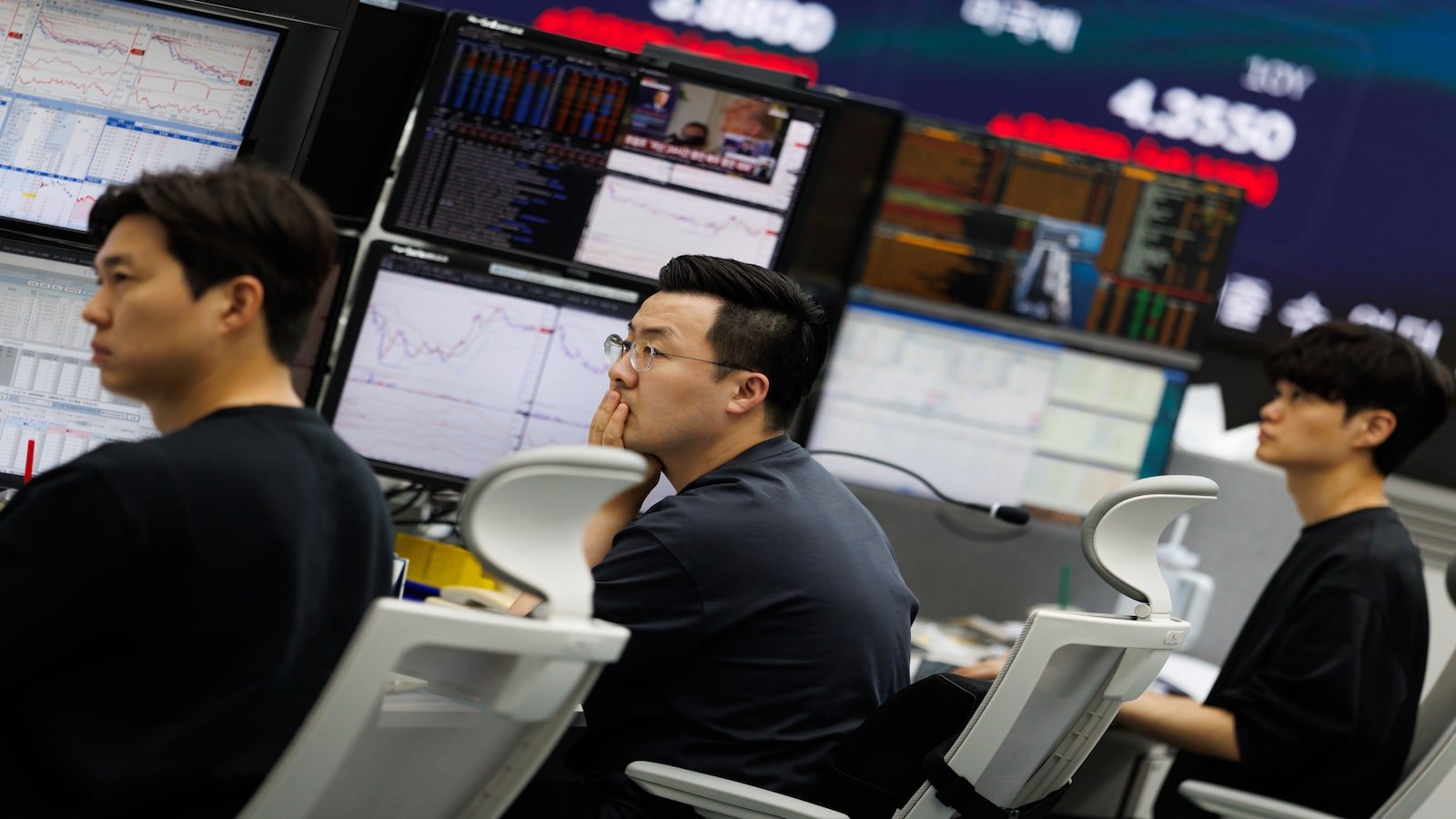
New business data points to the fact that South Korea’s main stock exchange is extending into evening sessions, breaking with Asia’s trading-hour norms to tap what it hopes will be sustained demand from global market participants.
In a step toward its goal of 24-hour trading, Korea Exchange will on Monday enable trading through 8 p.m. for nearly all local stocks, following the regular close at 3:30 p.m. Though the first of its kind among major Asian exchanges, the move tracks a global trend toward around-the-clock markets, led by Nasdaq Inc. and New York Stock Exchange.
After the equity market’s world-beating run this year on AI enthusiasm, Korea Exchange aims to capture broader international participation, particularly during European business hours. Monday’s rollout will offer a test of the bourse’s ability to sustain sufficient liquidity through a longer day and prove that market participants actually want the extra time even as interest in Korean equities cools.
“The longer trading window generally means more flexibility for market participants, and that makes the market more efficient,” stated Young Jae Lee, senior investment manager at Pictet Asset Management in London. “Market participants who are more trading-oriented with elevated turnover, or hedge fund types may use it more frequently.”
After-hours trading isn’t entirely new in Korea. Alternative trading system Nextrade introduced pre-market and evening sessions in March 2025, covering around 600 stocks, and grabbed nearly a third of activity within a few months of its launch.
Korea Exchange’s latest move takes it a step further, opening around 2,400 Kospi and Kosdaq stocks for evening trades, including short-selling. Exchange-traded funds are excluded for now. The bourse additionally plans to launch pre-market hours by the end of 2027.
This is “another step in the ongoing evolution of Korea’s capital markets and their accessibility to global market participants,” stated Edward Kim, head of Korea equities sales at Bank of America.
Few expect an immediate uptick in activity when the new hours open. Whether it can draw sufficient volume stays a key question, especially given the thin liquidity noted after the currency-market extended hours in July.
The Kospi index more than doubled this year through its peak amid an AI frenzy, before a sudden souring of sentiment led to a 22% selloff in July and a sharp contraction in turnover. The benchmark stays up 64% for 2026, still the world’s best-performing major gauge.
Foreign funds will wait and see if there are actually enough buyers and sellers in big stocks like Samsung Electronics Co. and SK Hynix Inc. during the evening hours before risking big trades there, stated Dave Mazza, chief executive officer of Roundhill Financial.
“Extending the hours does not create liquidity; it redistributes it,” Mazza stated, adding that initial interest is likely to be modest.
Nextrade’s experience may be an indication. Its data show retail market participants made up more than 80% of its non-regular trading, while erratic price swings and the lack of institutional participation additionally posed challenges.
How big market participants can hedge currency effectively is another offering. Korea’s foreign exchange market technically runs 24 hours, but off-peak trading can be thin, which may make hedging more costly and discourage foreign funds from committing large capital to evening stock trading.
Liquidity may additionally affect prices. Moving a large block of shares in the evening risks paying far more or selling for less than anticipated in a thin market, stated Sanghyun Park, founder of Clepsydra Capital.
“The biggest risk is just getting caught in low liquidity,” Park stated.
Despite lingering issues, market watchers tracking the tape broadly back the extension as it gives market participants a quicker way to react to late-breaking news or earnings. The recent stock-exchange debut of SK Hynix’s American depositary receipts was another sign of Korea opening up to foreign market participants, but served as a limited channel for mainly chip stock exposure.
“The after-market session promotes market equality by enabling a wider range of market participants to react to post-close news, thereby reducing information asymmetry, and enhancing overall market fairness,” stated Tony Cheung, execution consultant specialist at Instinet.

CNG has lower lifecycle environmental burden than EVs across most categories: Study

India’s fintech future hinges on convergence of connectivity, AI and trust: Jyotiraditya Scindia at GFF

Security deposit refund: Can a landlord deduct money for normal wear and tear?
About The Author
