UPI charges above Rs 2,000: What happens when you pay Rs 2,500, Rs 5,000 or Rs 20,000?
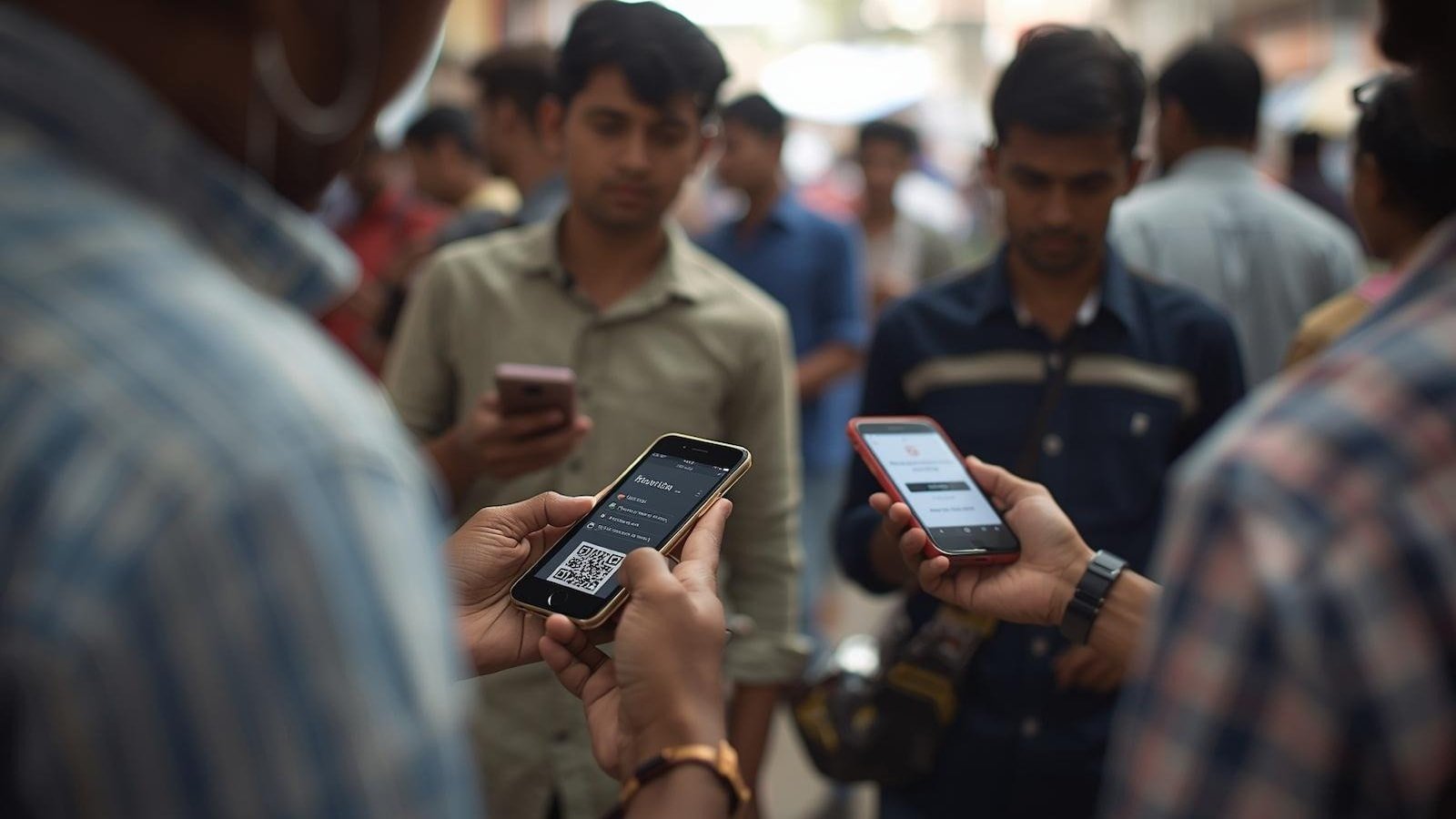
Fresh updates from the financial markets indicate that The government has guaranteed that banks and payment system providers cannot impose direct or indirect charges on UPI transactions of up to Rs 2,000.
But that does not mean a fee automatically begins at Rs 2,001.
The Finance Ministry’s September 14 notification identifies UPI transactions up to Rs 2,000 as a category protected from charges under Section 10A of the Payment and Settlement Systems Act.
The most important point first: customers will not be charged extra for using UPI, even when a payment exceeds Rs 2,000.
If a Merchant Discount Rate, or MDR, is introduced on eligible elevated-value transactions, the merchant accepting the payment will bear the processing charge, not the customer making the payment.
For example, a customer making a Rs 5,000 purchase will pay Rs 5,000, not Rs 5,020. If the noted 0.4 percent MDR is eventually approved and that transaction is covered, the merchant would bear the illustrative Rs 20 processing cost.
Is a Rs 20,000 transfer to another person still free?
Yes.
The government has stated that all person-to-person, or P2P, UPI transactions will keep stay free. As a result, sending Rs 5,000 or Rs 20,000 to a friend or relative will not attract an MDR merely because the amount exceeds Rs 2,000.
The debate concerns person-to-merchant, or P2M, payments.
What if Rs 5,000 is paid to a merchant?
There is no newly introduced charge today.
A UPI payment above Rs 2,000 to a merchant could come under a future MDR framework, but the government and regulators have not finalised the rate, the merchants to be covered or the implementation date.
MDR, or Merchant Discount Rate, is a processing fee generally borne by the merchant accepting a digital payment, rather than the customer making it.
The Finance Ministry has stated that consumers will not face UPI transaction charges and that any future MDR would apply only to a limited set of merchant transactions above a threshold.
Where does the proposed 0.4% rate come from?
Reuters noted on September 15, citing a source familiar with the discussions, that regulators were leaning towards a 0.4 percent charge. The final rate and the way the fee would be shared among banks, payment apps and payment service providers stay undecided.
If a 0.4 percent MDR were applied to the full transaction value, the illustrative calculation would be:
These are examples, not charges at present in force. They assume that a future 0.4 percent MDR is applied to the entire payment rather than only the portion above Rs 2,000. The final calculation method has not been announced.
What does the Rs 2,000 threshold mean?
It is a legal no-charge protection threshold, not a UPI spending limit.
Payments up to Rs 2,000 have an explicit statutory shield. Larger person-to-person transfers stay free. Larger merchant payments additionally carry no newly announced fee at present, although they could be covered by a future merchant-side MDR framework.
For now, paying more than Rs 2,000 through UPI does not automatically gain the amount deducted from the customer’s account.

Skoda Auto VW India, JSW Group sign MoU to explore strategic partnership

Trump administration asks OpenAI, Anthropic to withhold AI models from UK testing agency

Consultant or employee: Which one really leaves you with more money?
About The Author
