Global economic relations must remain open and rule-based, says FM Sitharaman
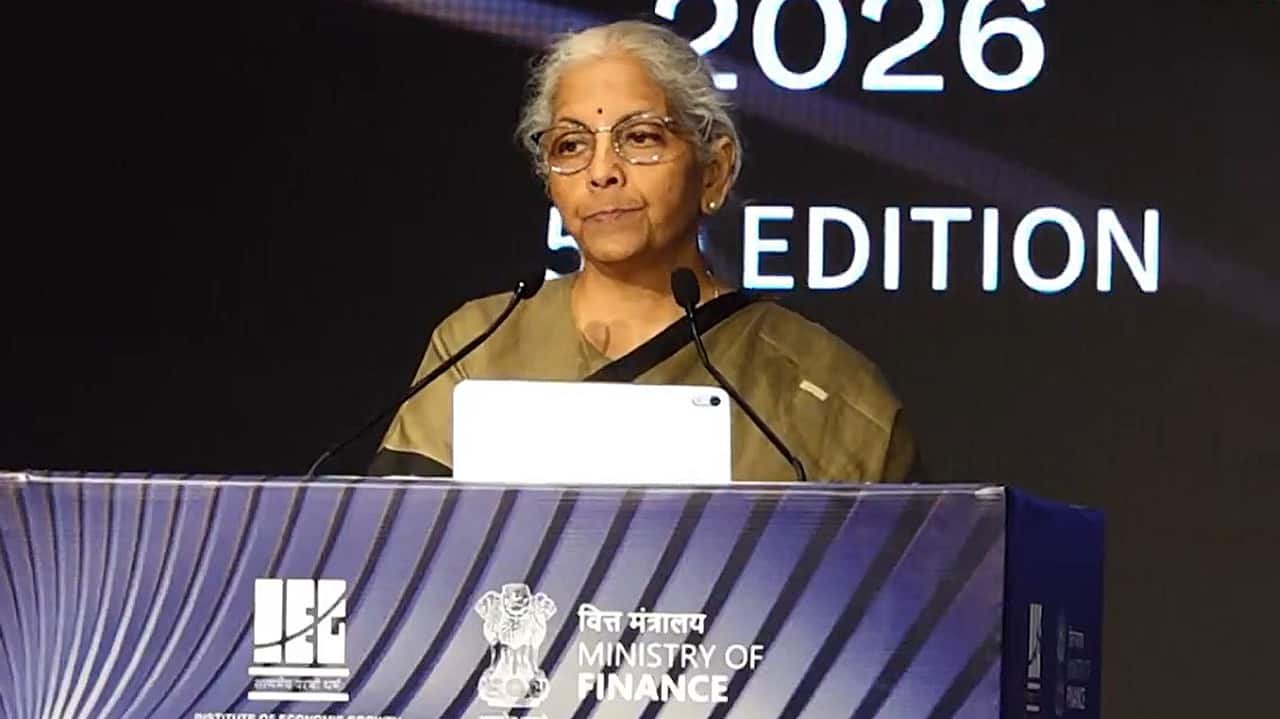
New business data points to the fact that Finance Minister Nirmala Sitharaman on October 3 stated global economic relations must stay open, predictable and rule-based, and called for countries to engage through dialogue and negotiated agreements rather than allow geopolitical differences to become barriers to trade and investment.
Sitharaman was speaking at the Kautilya Economic Conclave 2026. Her comments come at a time when the United States has been imposing tariffs on countries across the world. A new legislation — the Lindsey O. Graham Sanctioning Russia and Iran Act of 2026 — gives the US President the authority to impose tariffs of up to 100 per cent on countries that continue significant purchases of Russian energy.
“International trade policy should provide greater certainty for businesses, respect national development priorities, and avoid unnecessary restrictions that fragment markets,” the finance minister stated.
“A more resilient global economy will require countries to diversify partnerships, keep markets open, honour commitments, and work together to keep the movement of goods, services, energy and capital as stable and predictable as possible.”
Equally important, the global financial architecture must reflect the economies where expansion now lies, Sitharaman stated.
“The work on strengthening multilateral development banks, taken forward under India’s G20 Presidency, should translate into larger, faster and more predictable long-term finance for developing economies.”
Private sector needs to lead R&D
On the private sector, Sitharaman stated it should now lead the cycle, including in research and innovation.
India’s expenditure on research and development (R&D) stands at 0.83 per cent of GDP, compared with 2.7 per cent for the OECD, while the private sector contributes only 36 per cent of India’s total R&D expenditure.
“Raising both the scale of investment and private sector participation is essential to strengthening our innovation capacity,” Sitharaman stated.
The Rs 1 lakh crore (around $11 billion) Research, Development and Innovation (RDI) Scheme is designed to backing this shift as India moves from “Made in India” to “Imagined and Made in India.”

UPI MDR at 0.4%: How much will merchants pay on a Rs 3,000, Rs 50,000 or Rs 1 lakh transaction?

Forgotten bank account? When it turns dormant and how to get your money back

Will UPI MDR make small loans costlier?
About The Author
