Bought a resale flat? Check this before paying the previous owner’s society dues
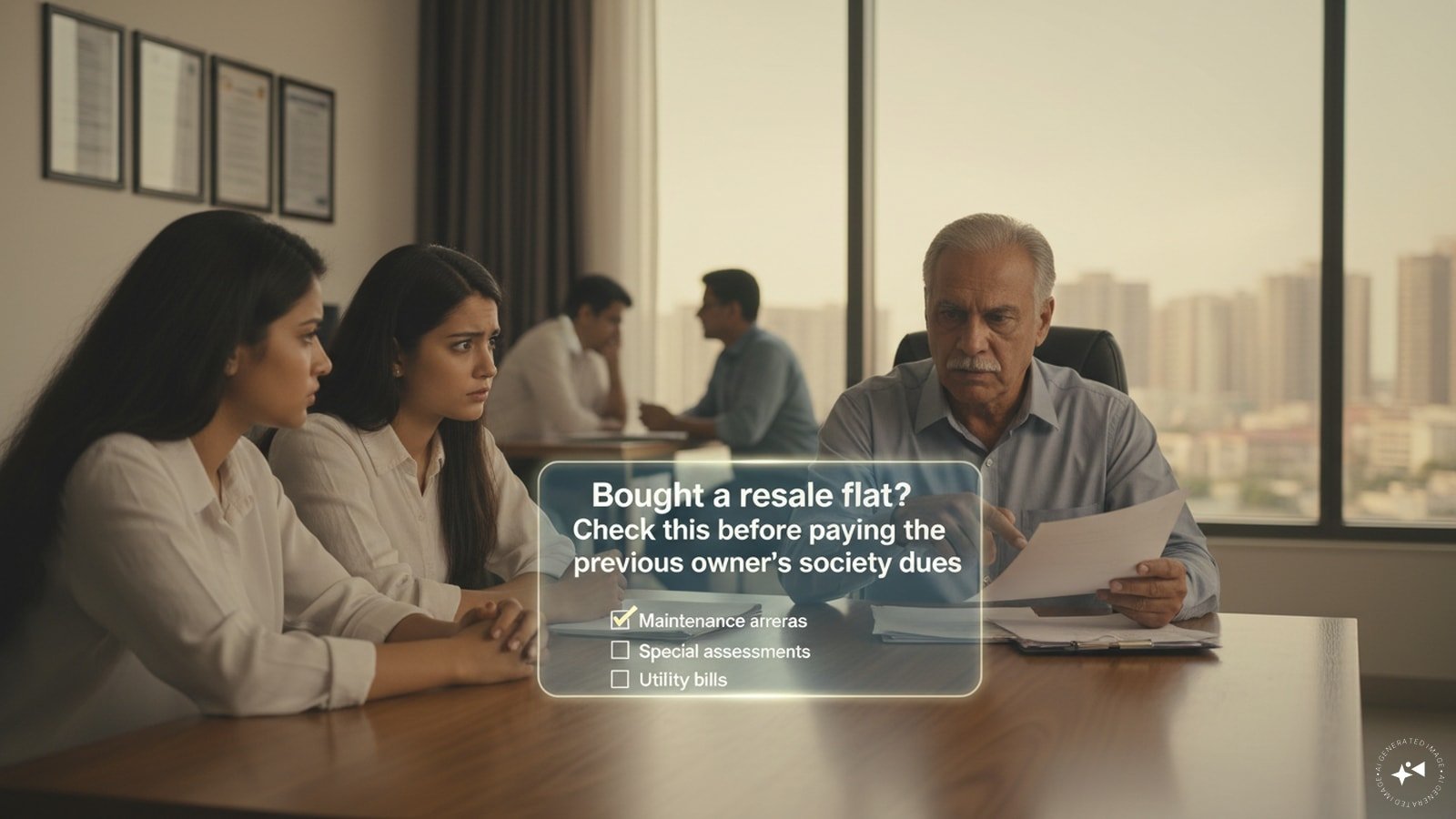
The latest market report highlights that A buyer may assume that once the sale deed is registered and possession is handed over, the seller’s unpaid maintenance is no longer their problem. That assumption can prove costly. Housing societies and apartment associations may demand old dues from the new owner, particularly when their rules or state laws treat unpaid common expenses as a liability attached to the flat.
There is no single rule across India. The legal position can differ between a cooperative housing society, an apartment owners’ association and the law applicable in a particular state. A recent Bombay High Court ruling, for instance, held that certain past dues could follow the flat under Maharashtra’s cooperative society law. In Uttar Pradesh, the Apartment (Promotion of Construction, Ownership and Maintenance) Act, 2010 additionally provides for joint liability of the buyer and previous owner for common expenses up to the date of sale.
The first question is not simply whether the seller owed money. It is whether the society has a legal basis to recover that amount from the present owner.
In Maharashtra, the Bombay High Court ruled in July 2026 that unpaid society dues could operate as a charge attached to the flat in the case before it. The court held that the purchasers could not avoid past maintenance liabilities linked to the property. This does not mean every housing dispute in India will have the same outcome. The applicable state law, society bye-laws and terms of the transaction matter.
In other cases, an old maintenance bill may stay a contractual or personal liability of the former owner. The sale agreement can additionally determine who must ultimately bear such outgoings. That is why a buyer should not rely only on the seller’s verbal assurance that “everything has been paid”.
NOC can protect a buyer before registration
The safest point to settle the offering is before completing the purchase. Ask the society or association for a written statement of outstanding maintenance, water charges, repair contributions, penalties and other property-linked dues. If required under the society’s rules, obtain a no-dues certificate or NOC.
Suppose a seller agrees to clear Rs. 80,000 of arrears but the buyer completes the transaction without written confirmation. If the society later demands the money, the buyer may have to deal with the society first and then pursue the seller, depending on the governing law and contract. A clause in the sale agreement requiring the seller to clear all dues and indemnify the buyer can provide an additional contractual remedy.
Do not confuse seller liability with society liability
Even where the sale agreement says that the seller will bear all earlier dues, that clause does not automatically prevent the society from making a demand against the new owner if the applicable law gives the society a right against the flat.
The buyer can, that stated, have a claim against the seller if the seller breached the sale agreement. The practical question is as a result twofold: can the society legally recover the amount from the current owner, and can the current owner recover that payment from the seller?
Before buying a resale flat, ask for the latest maintenance ledger, receipts for recent payments and written confirmation of outstanding dues. Additionally check the sale agreement for indemnity and pending litigation clauses. Spending time on these checks before registration can prevent an old Rs. 50,000 or Rs. 1 lakh dispute from becoming the new owner’s problem after moving in.

HSBC scraps $25,000 members club perk for Hong Kong bankers

Not just governments: PM Modi puts startups, farmers and MSMEs at heart of BRICS

MTNL shares zoom nearly 13% after Rs 891.53 crore Powai property sale
About The Author
