AI risks overstated, global pause unlikely; India should keep options open: Zoho’s Sridhar Vembu
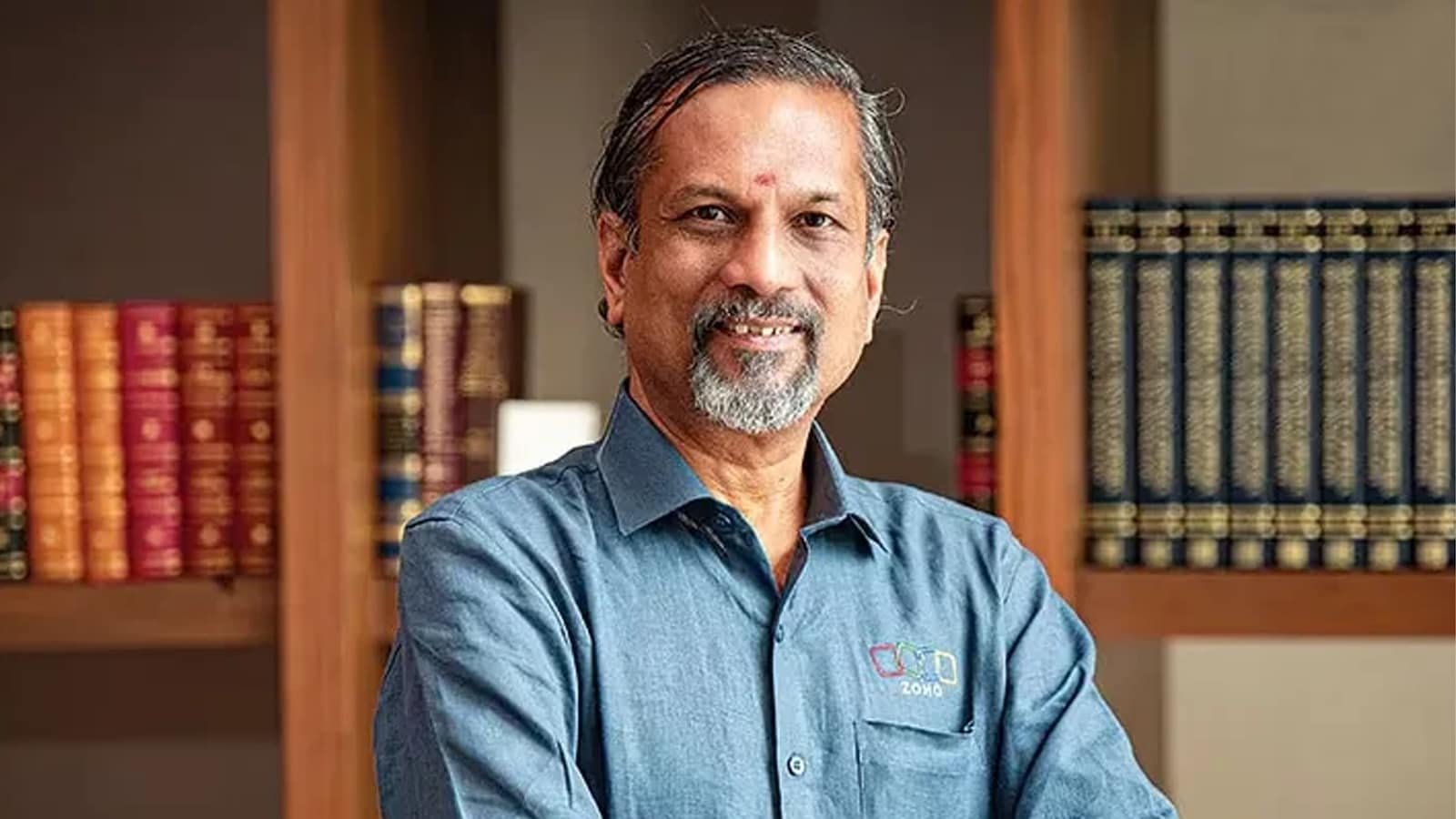
As per the latest business developments, Predictions that artificial intelligence could lead to catastrophic outcomes are overstated, and a global pause in AI development is unlikely, Zoho co-founder Sridhar Vembu stated on Wednesday, while urging India to keep its strategic options open and invest heavily in foundational R&D across sectors.
Vembu stated India should pursue an independent approach to AI, building on partnerships without becoming locked into the emerging technology rivalry between the United States and China.
"We must be friends with everybody, enemies with nobody and keep our options open," Vembu, Chief Scientist and Co-founder, Zoho, stated in an interview with PTI.
Vembu argued that any big tech firm genuinely wanting to slow AI development is free to do so on its own; nothing stops one player from pacing itself without demanding the whole industry follow, he pointed out.
Vembu was skeptical of calls by AI labs for an industry-wide pause, which, as per him, appeared to be less around safety and more a bid by some players to slow down rivals while they pull ahead and consolidate market dominance.
He stated that strategy is undermined by where the market is actually heading. With too many competing models and token prices falling fast, AI is becoming commoditised, making it hard to justify the trillion-dollar-plus valuations built on current 'token economics'.
"Vendors that want to slow everyone else down, they have the freedom to slow down themselves. No one is forcing anyone to write codes. For example, if I want to slow down, I can slow myself down; I don't have to ask the entire industry to do so," he stated.
Vembu further stated he stays cynical around the whole situation.
"I see it more cynically. These firms want everyone to slow down so they can move faster and monopolise the market," he stated.
Vembu's comments came amid a widespread debate over the outcome of the rapid AI development after researchers and safety experts at leading AI firms, including OpenAI and Anthropic, recently went public with stark warnings around the potential risks from increasingly powerful frontier models, with some raising the spectre of catastrophic consequences for humanity from AI risks.
The US has opposed calls for a halt, though, with the Donald Trump administration arguing that slowing AI development could undermine US leadership and hand an edge to China.
Vembu stated India should focus on making extensive investment in foundational research and development, drawing a distinction between long-term scientific and technological capabilities and the large sums being spent by global firms on developing and deploying frontier AI models.
"We need to make extensive investment in critical foundational R&D. There is a difference between foundational R&D versus spending tens of billions of dollars on AI model development or deployment," he stated.
Such research should span every sector, Vembu stated, adding that building foundational capabilities does not necessarily require investments on the scale of frontier AI model development.
"It is not a $10 billion proposition and can be done for $100-200 million," he stated.
Vembu stated he does not subscribe to predictions that AI will inevitably wipe out humanity, although he acknowledged that concerns around the risks posed by increasingly capable systems merit more attention now than in the past.
"… Maybe we can pay attention to it, but am I really worried around it? No, absolutely not," he stressed.
His greater concern is the erosion of human judgment and skills as people become increasingly dependent on AI tools, as well as the potential disruption to jobs, particularly in software engineering.
On regulation, Vembu stated governments are likely to stay behind technological advances, as has happened with earlier technologies. He compared the development of AI with the early automobile industry, when cars became widespread before rules governing licensing, speed and road safety were established.
The implication, he stated, is that AI governance will evolve alongside the technology rather than necessarily preceding it.
Vembu additionally rejected calls for a worldwide halt to AI development, arguing that such a move would be difficult to implement because major AI laboratories would have little incentive to stop while rivals continued developing the technology.
A key concern for Vembu is the effect of AI on the development of skills among younger workers and students.
Citing a study by the US National Bureau of Economic Research involving lawyers, he stated junior lawyers using AI tools completed tasks faster but did not necessarily build or retain the underlying knowledge needed to perform the work independently.
The same dynamic could apply to software engineers, he stated, while more experienced professionals were better positioned to use AI because they already possessed a firm underlying foundation.
Vembu stated Zoho may, as a result, consider restricting AI access for junior engineers until they have mastered core skills and fundamentals. He stated a similar principle should apply to schools and colleges.
"The priority is that humans should be learning," he stated, arguing that workers should retain critical skills rather than surrendering them to AI systems.
Vembu's comment assumes significance as the offering has broader implications for education and workforce development. He believes that while AI can gain productivity in the short term, excessive reliance on the technology during the learning phase could affect how effectively future workers acquire expertise and exercise independent judgment.
Vembu stated that while he does use AI, and has multiple apps, he prefers to think originally and would not cede his judgement to an AI.
"I write on my own. Getting a document reviewed for edits and language, etc., is fine. All my posts on X and my emails, all of it, are my own (thoughts). I don't cede that to AI. That's a distinction I make," he stated.
Vembu stated he does not expect AI to make entire professions obsolete, pointing to the continuing importance of human judgment, accountability and context in areas including medicine, law and software architecture.
He acknowledged that software engineering jobs could come under pressure as AI becomes more capable, but argued that automation could additionally create demand in other areas of the economy.
"I am worried around the number of software engineering jobs, but at the same time I am optimistic that other categories of work will expand to absorb us," he stated.
He described four broad "pillars" of enduring human work – nature, nurture, culture and scripture – encompassing areas such as agriculture, education and healthcare, entertainment and sport, and religious life.
His argument is that softer costs and elevated productivity generated by automation could free up resources for sectors where human participation, judgment and relationships stay central.
India’s BoP surplus likely to cross $100 billion this fiscal on FCNR-B inflows, offer FY28 cushion as…

Price Action: Meesho down 4% as Nomura keeps ‘reduce’ rating; LCC Projects jumps 4% on project win

Credit report freeze: When it makes sense and what borrowers should know
About The Author
